500 Hour Yoga Teacher Training in Rishikesh, India
Two months that combine our 200 and 300 hour courses, from first practice to mastery.
Duration2 months · 57 nights
StylesHatha · Ashtanga · Vinyasa
CertificateYoga Alliance RYT-500
Teachers12 specialists
StayShared or private room
Meals3 sattvic meals daily
Next batch01 Of Every Month
Course fee fromUS$1,400US$1,750
About the course
500 Hour Yoga Teacher Training in Rishikesh, at a glance
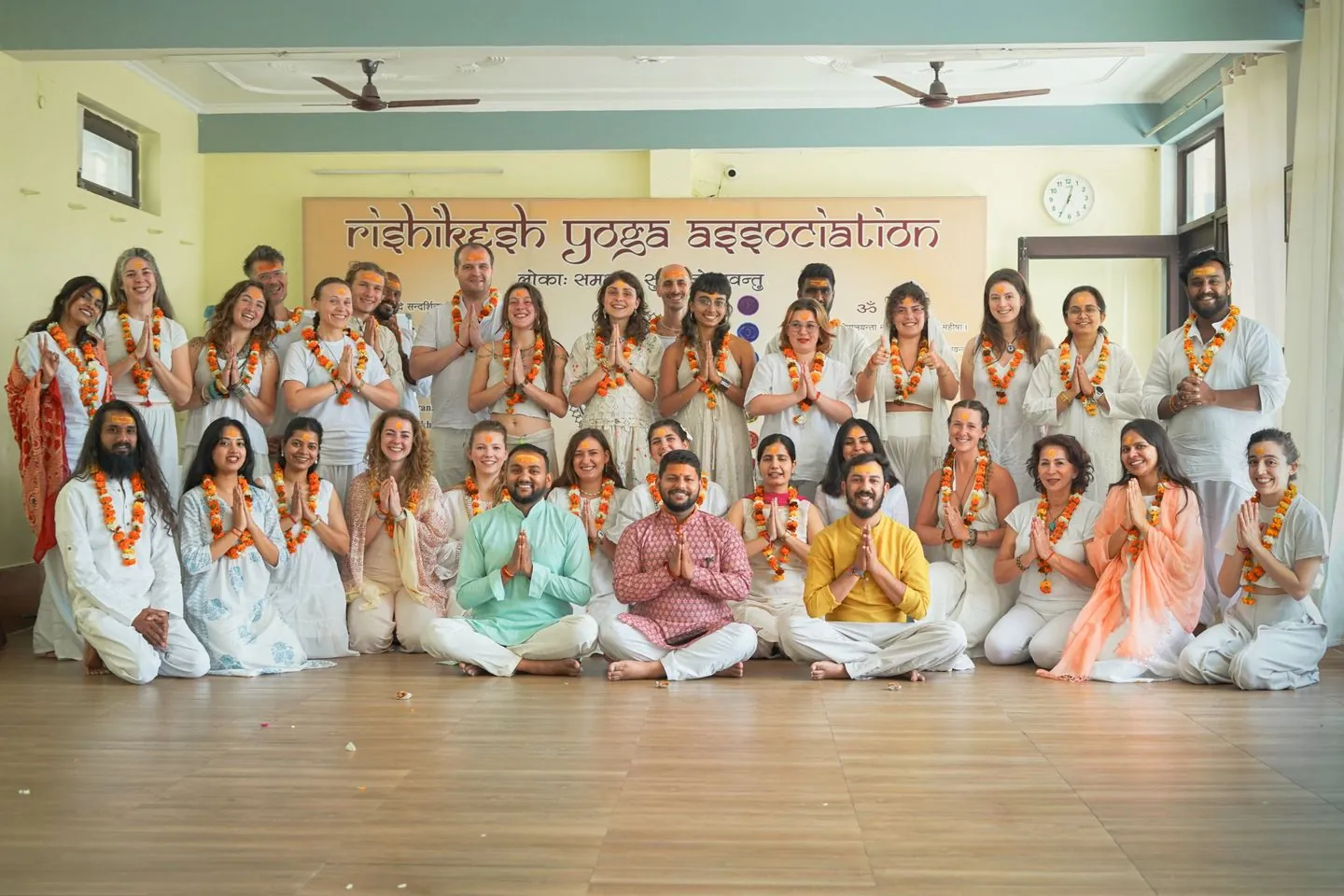
The 500 hour yoga teacher training in Rishikesh at Rishikesh Yoga Association is a master-level, two-month residential course that combines our 200 hour and 300 hour trainings. Month one covers the complete 200 hour syllabus; month two takes you into advanced Ashtanga, Hatha and Vinyasa, yoga therapy, deeper philosophy and teaching mastery.
Why train in Rishikesh?
Set in the foothills of the Himalayas, Rishikesh has been a home of yoga for centuries and is known around the world as the yoga capital. Two months here give you time to live the ashram rhythm fully, with the evening Ganga Aarti, Himalayan excursions and quiet hours of study.
What makes this course different
Each subject is taught by its own specialist, groups stay small for personal guidance, and the teaching follows the lineage of Guru Atmaram Ji. Your room for 57 nights, three sattvic vegetarian meals a day, books, a cleansing kit and excursions are included in one price, starting at US$1,400.
After the course
You receive a 500 hour certificate from our Yoga Alliance registered school (RYS 200 and 300), so you can register as an RYT-500. Prefer to train in two steps? Take the 200 hour and 300 hour courses separately.
Overview
Rishikesh Yoga Association’s 500 Hour Yoga Teacher Training is a master-level, two-month residential course that combines the 200 hour and 300 hour trainings, starting on the 1st of each month in Tapovan, Rishikesh. It costs US$1,400 including 57 nights of accommodation and meals.
Month one covers the complete 200 hour syllabus; month two takes you into the advanced 300 hour syllabus, from the Ashtanga secondary series to therapeutic yoga. Along the way you refine your personal practice, alignment, adjustments, class sequencing, chakras and mantras, anatomy, philosophy and meditation.
Who it is for
Dedicated students who want the complete training in one journey
Teachers planning to teach yoga professionally
Practitioners who want to study therapeutic yoga
Anyone with two months to immerse in ashram life
A long, physically intense course; it is not advised during pregnancy.
What you take home
Personal practiceTwo months of daily, refined practice.
Asana alignmentCorrect alignment, modifications and props.
Asana adjustmentsHands-on skills under experienced teachers.
Class sequencingHow to plan and lead any class.
Chakras & mantrasSubtle body, mantra and yoga nidra.
AnatomyBody systems and applied anatomy.
Yoga philosophyFrom the Sutras to the Bhagavad Gita.
MeditationA deep, lasting meditation practice.
Yoga therapyYoga for health and well-being.
Course Syllabus
The 500 hour course has two syllabi. Switch between the months, then choose a module to see every topic.
Module 1 of 11 · 6 topics
Shatkarma
Cleansing practices
The classical cleansing techniques of Hatha Yoga, from neti to vaman dhauti, practised under supervision to purify the body before deeper practice.
Introduction to shatkarma
Jala neti
Sutra neti
Eye cleansing (trataka and eye cups)
Vaman dhauti
Kapalbhati
Module 2 of 11 · 47 postures
Ashtanga Yoga
Full primary series with adjustments
The complete Ashtanga Vinyasa primary series, from Surya Namaskar to the finishing sequence, learned posture by posture with hands-on adjustments.
Sun salutations 2
Surya Namaskar A
Surya Namaskar B
Standing sequence 11
Padangusthasana
Padahastasana
Utthita Trikonasana
Parivrtta Trikonasana
Utthita Parsvakonasana
Prasarita Padottanasana A, B, C & D
Parsvottanasana
Eka Pada Padangusthasana A, B, C & D
Ardha Baddha Padmottanasana
Utkatasana
Virabhadrasana A & B
Seated sequence 21
Dandasana
Paschimottanasana A, B, C & D
Purvottanasana
Ardha Baddha Padma Paschimottanasana
Triang Mukhaikapada Paschimottanasana
Janu Sirsasana A, B & C
Marichyasana A, B, C & D
Navasana
Bhujapidasana
Kurmasana
Supta Kurmasana
Garbha Pindasana
Kukkutasana
Baddha Konasana A & B
Konasana
Upavistha Konasana
Supta Konasana
Supta Padangusthasana A & B
Ubhaya Padangusthasana
Urdhva Mukha Paschimottanasana
Setu Bandhasana
Finishing sequence 13
Urdhva Dhanurasana
Salamba Sarvangasana
Halasana
Karnapidasana
Urdhva Pindasana
Matsyasana
Urdhva Padmasana
Sirsasana
Urdhva Dandasana
Baddha Padmasana
Yoga Mudra
Utpluthih
Savasana
Module 3 of 11 · 10 topics
Vinyasa Flow
Sequencing postures
How to link breath and movement into creative, intelligent sequences for every level of student.
On-your-feet yogasanas
Seated vinyasa sequences
Seated posterior stretch sequences
One-leg yogasanas
The supine sequence
The bow pose sequence
The triangle pose sequence
The inverted posture sequence
Meditative pose sequence
Vishesha vinyasa krama
Module 4 of 11 · 48 postures
Hatha Yoga
Asanas and their adjustments
Classical postures held with awareness, alignment and breath, organised into eight families, with the adjustment for each.
Dynamic postures 4
Pawanmuktasana series
Marjariasana
Vyaghrasana
Surya Namaskar
Standing postures 13
Tadasana
Utkatasana
Padahastasana
Trikonasana
Parivrtta Trikonasana
Parsvakonasana
Parivrtta Parsvakonasana
Virabhadrasana I
Virabhadrasana II
Virabhadrasana III
Ardha Chandrasana
Parsvottanasana
Prasarita Padottanasana
Inverted postures 5
Sirsasana
Sarvangasana
Halasana
Pincha Mayurasana
Adho Mukha Vrksasana
Twisting postures 3
Ardha Matsyendrasana
Parivrtta Janu Sirsasana
Kati Chakrasana
Back bend postures 10
Bhujangasana
Shalabhasana
Dhanurasana
Matsyasana
Ustrasana
Kandharasana
Chakrasana
Gomukhasana
Setu Asana
Raja Kapotasana
Forward bend postures 5
Paschimottanasana
Janu Sirsasana
Ardha Padma Paschimottanasana
Pada Prasar Paschimottanasana
Adho Mukha Svanasana
Balancing postures 5
Vrksasana
Baka Dhyanasana
Mayurasana
Natarajasana
Garudasana
Relaxation postures 3
Shashankasana
Makarasana
Savasana
Module 5 of 11 · 9 topics
Pranayama
Breath control
Breathing techniques that balance energy and calm the nervous system, taught step by step with their benefits and cautions.
Introduction to pranayama
Importance of pranayama
Yogic breathing techniques for increasing awareness
Benefits of pranayama
Different pranayamas and general guidelines
Nadi Shodhana pranayama
Bhramari pranayama
Sheetali and Sheetkari pranayama
Ujjayi pranayama
Module 6 of 11 · 10 topics
Mudras
Hand and body seals
Simple hand and body seals that support health, concentration and meditation.
Introduction to yogic mudras
Jnana and Chin mudra
Bhairava mudra
Shambhavi mudra
Nasikagra mudra
Prana mudra
Maha mudra
Mudras for better health
Mudras for concentration
Common mudras for daily use
Module 7 of 11 · 11 topics
Yoga Philosophy
Roots of yoga
The ideas behind the practice, from Patanjali’s Yoga Sutras to the eight limbs and the five koshas.
Introduction to yoga
Its philosophy and evolution
Concept of Hatha Yoga
Different practices of Hatha Yoga
Introduction to the Yoga Sutras of Patanjali
Importance of discipline on the path of yoga
Definition of yoga and its purpose
Ashtanga Yoga: Yama and Niyama
Asana, Pranayama, Pratyahara, Dharana, Dhyana and Samadhi
Introduction to Panchakosha
Lives of yogis (inspiring stories)
Module 8 of 11 · 10 topics
Meditation
Stilling the mind
A daily meditation practice using several techniques, so you can find, and later teach, the one that suits each student.
Introduction to meditation and concentration
Breath awareness meditation
Tips for developing concentration
Bahir and Antar trataka
Anapanasati (breath observation)
Antar mouna (silence practice)
Third eye meditation
Mantra meditation
Yoga nidra
Inner visualisation
Module 9 of 11 · 5 topics
Mantra Chanting
Sound and devotion
Traditional chants and prayers that open and close practice, with meaning and correct pronunciation.
What is a mantra, and the benefits of chanting
Shanti mantra (mantra of peace)
Gayatri mantra (universal prayer)
Yogena Chittasya (sloka on sage Patanjali)
Hare Rama, Hare Krishna (Maha mantra)
Module 10 of 11 · 13 topics
Anatomy
Body, safety and Ayurveda
Practical anatomy for safe teaching: how joints and muscles work, how injuries happen and how to prevent them.
What is yoga anatomy?
Importance of yoga anatomy
Importance of joint movement
How to improve flexibility
Types of injuries and suggestions
Circulatory system
Ankle joint: muscles, injuries and improvements
Knee joint: muscles, injuries and improvements
Hip joint: muscles, injuries and improvements
Spine: joints, muscles, injuries and improvements
Shoulder joint: muscles, injuries and improvements
Physiology and therapeutic benefits of shatkarma
Introduction to Ayurveda
Module 11 of 11 · 9 topics
Teaching Methodology
Becoming a teacher
Everything you need to stand in front of a class: voice, demonstration, correction, planning and confidence.
Positive and conscious communication
Friendship and trust
Time management
Qualities of a teacher
Principles of demonstrating, observing, assisting and correcting
Use of voice in class
Mental and emotional preparation for teaching
Class preparation
Step-by-step class structure planning
Module 1 of 15 · 10 topics
Mastering Vinyasa Flow
Advanced sequencing
Advanced vinyasa sequencing: designing intelligent, creative classes around every family of postures.
On-your-feet yogasanas
Seated vinyasa sequences
Seated posterior stretch sequences
One-leg yogasanas
The supine sequence
The bow pose sequence
The triangle pose sequence
The inverted posture sequence
Meditative pose sequence
Vishesha vinyasa krama
Module 2 of 15 · 48 postures
Ashtanga Primary Series
Yoga Chikitsa
The full primary series refined: deeper alignment, breath, bandhas and confident hands-on adjustments.
Sun salutations 2
Surya Namaskar A
Surya Namaskar B
Standing sequence 12
Padangusthasana
Padahastasana
Utthita Trikonasana
Parivrtta Trikonasana
Utthita Parsvakonasana
Parivrtta Parsvakonasana
Prasarita Padottanasana A, B, C & D
Parsvottanasana
Eka Pada Padangusthasana A, B, C & D
Ardha Baddha Padmottanasana
Utkatasana
Virabhadrasana A & B
Seated sequence 21
Dandasana
Paschimottanasana A, B, C & D
Purvottanasana
Ardha Baddha Padma Paschimottanasana
Triang Mukhaikapada Paschimottanasana
Janu Sirsasana A, B & C
Marichyasana A, B, C & D
Navasana
Bhujapidasana
Kurmasana
Supta Kurmasana
Garbha Pindasana
Kukkutasana
Baddha Konasana A & B
Konasana
Upavistha Konasana
Supta Konasana
Supta Padangusthasana A & B
Ubhaya Padangusthasana
Urdhva Mukha Paschimottanasana
Setu Bandhasana
Finishing sequence 13
Urdhva Dhanurasana
Salamba Sarvangasana
Halasana
Karnapidasana
Urdhva Pindasana
Matsyasana
Urdhva Padmasana
Sirsasana
Urdhva Dandasana
Baddha Padmasana
Yoga Mudra
Utpluthih
Savasana
Module 3 of 15 · 42 postures
Ashtanga Secondary Series
Nadi Shodhana
The intermediate (secondary) series, the nerve-cleansing sequence of backbends, leg-behind-head postures and arm balances.
Intermediate series 27
Pasasana
Krounchasana
Shalabhasana A & B
Bhekasana
Dhanurasana
Parsva Dhanurasana
Ustrasana
Laghu Vajrasana
Kapotasana
Supta Vajrasana
Bakasana
Bharadvajasana
Ardha Matsyendrasana
Eka Pada Sirsasana A, B & C
Dwi Pada Sirsasana B
Yoga Nidrasana
Tittibhasana A, B & C
Pincha Mayurasana
Karandavasana
Mayurasana
Nakrasana
Vatayanasana
Parighasana
Gomukhasana A, B & C
Supta Urdhva Pada Vajrasana A & B
Mukta Hasta Sirsasana A, B & C
Baddha Hasta Sirsasana A, B, C & D
Finishing sequence 15
Urdhva Dhanurasana
Paschimottanasana
Salamba Sarvangasana
Halasana
Karnapidasana
Urdhva Padmasana
Pindasana
Matsyasana
Uttana Padasana
Sirsasana
Baddha Padmasana
Yoga Mudra
Padmasana
Utpluthih (Tolasana)
Savasana
Module 4 of 15 · 17 topics
Pranayama
Breath control
From the pranic body and the four types of breathing to advanced pranayama, kriyas and breath retention.
Introduction to pranayama
The pranic body
Natural breathing
Abdominal breathing
Thoracic breathing
Clavicular breathing
Yogic breathing
Nadi Shodhana and its variations
Sheetali pranayama
Bhramari pranayama
Ujjayi pranayama
Bhastrika pranayama
Kapalbhati pranayama
Surya Bhedana pranayama
Chandra Bhedana pranayama
Agnisar kriya
Kumbhaka (breath retention)
Module 5 of 15 · 5 topics
Bandhas
Energy locks
The four bandhas in depth, and how to apply them within asana and pranayama.
Introduction to bandhas
Jalandhara bandha
Mula bandha
Uddiyana bandha
Maha bandha
Module 6 of 15 · 17 topics
Meditation (Dhyana)
Stilling the mind
The science and practice of meditation: brain waves, stress, obstacles, and a wide range of classical techniques.
Introduction to meditation
Why meditation?
Meditation and brain waves
Meditation and its effect on stress management
Obstacles in meditation
Role of concentration in meditation
Tips for developing concentration
Meditation on body and breath
Om and mantra meditation
Antar and Bahir (inner and outer) meditation
Trataka
Dynamic meditation
Tips for silence meditation practice
Japa meditation
Ajapa japa
Antar mouna
Nada meditation
Module 7 of 15 · 5 topics
Relaxation (Yoga Nidra)
Conscious rest
Systematic relaxation and yoga nidra, and how to guide students into deep rest.
The relaxation postures
Stillness
Basic relaxation
Tension relaxation
Full body relaxation
Module 8 of 15 · 14 topics
Yoga Anatomy & Physiology
Applied anatomy
How Hatha yoga works on the body: muscle activation, stretching techniques and joint-specific anatomy.
Introduction to anatomy
Body movements
How Hatha Yoga works on our body
Muscle activation
Imbalances in the body and how to observe them
Active muscle stretching techniques
Passive muscle stretching
Anatomy of the shoulder joint complex
How to unlock the flexibility of the shoulder
Anatomy of the wheel pose
Nerve tensioning mudras
Anatomy of the ankle joint
How to enhance ankle function
Co-activation of the ankle muscles
Module 9 of 15 · 13 topics
Yoga Philosophy
Sutras and the Gita
A deeper study of the Yoga Sutras and an introduction to the Bhagavad Gita and Indian philosophy.
Introduction to Indian philosophy
Introduction to yoga philosophy
Introduction to the Yoga Sutras
Importance of discipline on the path of yoga
Definition of yoga
Consistent practice and non-attachment (Abhyasa and Vairagya)
The concept of Ishvara (God) in the Yoga Sutras
Obstacles and distractions on the path of yoga (chitta-vikshepa and antaraya)
Pancha klesha (five causes of suffering)
Ashtanga Yoga (the eight limbs of yoga)
Concept of siddhi (supernatural powers)
Concept of the three gunas
Introduction to the Bhagavad Gita
Module 10 of 15 · 9 topics
Mantra Chanting
Sound and devotion
A wider repertoire of Vedic and devotional mantras for practice and teaching.
Om Asato Maa Sadgamaya
Om Tryambakam Yajamahe
Guru Brahma Guru Vishnu Gurudevo Maheshwara
Om Saha Navavatu
Hare Rama, Hare Krishna
Vakratunda Mahakaya mantra
Yogena Chittasya
Om Bhur Bhuva Swaha (Gayatri)
Tvameva Mata Cha Pita Tvameva
Module 11 of 15 · 8 topics
Mudras
Yoga gestures
Advanced mudras, including Khechari and Yoni mudra, and when to use them.
Introduction to mudras
Jnana and Chin mudra
Yoni mudra
Bhairava mudra
Hridaya mudra
Khechari mudra
Nasikagra mudra
Shambhavi mudra
Module 12 of 15 · 6 topics
Shatkarma
Yogic cleansing
Advanced cleansing practices, including nauli and agnisar kriya.
Introduction to shatkarma
Jala neti (nasal cleansing with salt water)
Rubber neti (nasal cleansing with a rubber string)
Agnisar kriya
Nauli kriya
Kapalbhati cleansing
Module 13 of 15 · 13 topics
Therapeutic Yoga
Yoga therapy
How to plan a yoga therapy session and apply yoga and Ayurveda to common health conditions.
Introduction to yoga therapy
Physiology and therapeutic benefits of shatkarma
How to plan a yoga therapy session
Homeostasis and the effect of pH on health
Arthritis: osteoarthritis and rheumatoid arthritis
Back pain: explanation and yogic approach
Endocrine system: importance of the glands
PCOD (polycystic ovary syndrome) and the yogic approach
Respiratory diseases: COPD and the yogic approach
Menstrual cycle and hormones
Kati vasti (Ayurvedic oil therapy)
Cupping therapy
Ayurveda and the daily routine
Module 14 of 15 · 3 topics
Teaching Practice
Leading classes
Supervised practice teaching with feedback on demonstration, alignment and instruction.
Demonstration
Alignment
Instructions
Module 15 of 15 · 9 topics
Teaching Methodology
The art of teaching
Refining your teaching: communication, presence, class structure and preparation.
Positive and conscious communication
Friendship and trust
Time management
Qualities of a teacher
Principles of demonstrating, observing, assisting and correcting
Use of voice in class
Mental and emotional preparation for teaching
Class preparation
Step-by-step class structure planning
How you are assessed (each month)
Written testtheory & philosophy
Asana practicalalignment
Attendanceall classes
Performancethroughout
Behaviourconduct
Daily Schedule
Six days a week follow a steady rhythm, from sunrise pranayama to evening meditation. The dial shows what is happening at the school right now, in Rishikesh time.
Now in Rishikesh--:--Morning practice
ClassesMeals & rest
Monday to Saturday. Sunday is a free day. All classes are mandatory; leave for illness or emergencies is given with your teacher’s permission.
PranayamaBreathwork to wake the body and steady the mind
Hatha YogaClassical Hatha asana practice
BreakfastSattvic vegetarian breakfast and herbal tea
Yoga AnatomyThe body in practice
Yoga PhilosophyTexts, concepts and stories
LunchFollowed by free time to rest and study
Ashtanga VinyasaLed practice with adjustments
Meditation & Mantra ChantingEvening practice
DinnerLight vegetarian dinner
Lights offRest for an early start
Dates, Rooms & Fees
Each batch starts on the 1st of the month and runs for two months. The fee is per person for the whole course and includes your room for 57 nights, three vegetarian meals a day, books, excursions and your certificate. Dates updated .
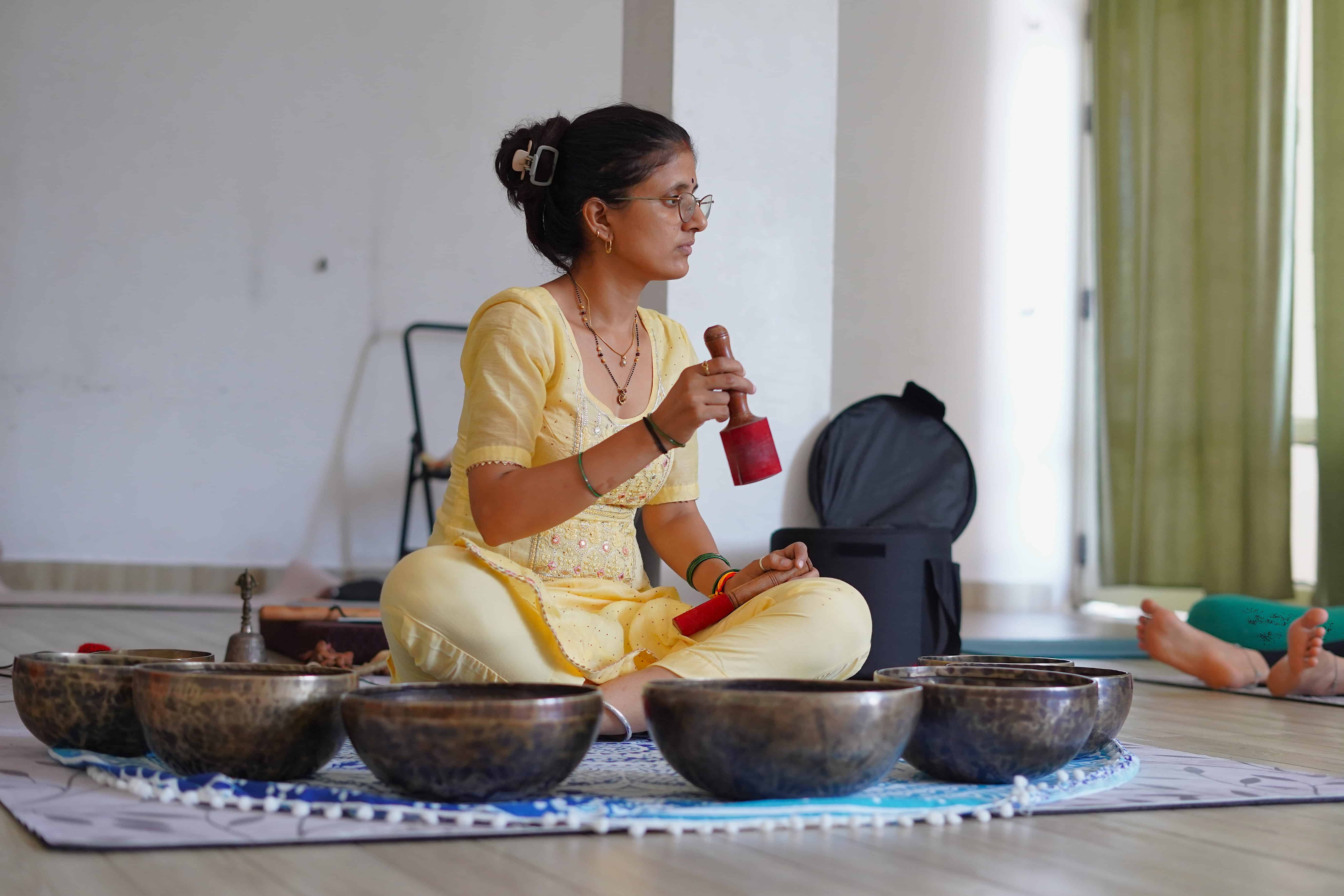
Yogini Mukesh JiSound Healing & Therapy500 RYT · Master’s in Yoga · 7+ years
Certification
On graduation day you receive a 500 hour certificate from Rishikesh Yoga Association, registered with Yoga Alliance as RYS 200 and RYS 300. It qualifies you to register with Yoga Alliance as an RYT-500.
Complete both monthsAttend all classes and pass the written tests, practicals and teaching assessments.
Receive your certificateAwarded at the graduation ceremony at the end of your second month.
Register as an RYT-500Apply online on the Yoga Alliance website with your certificate. Yoga Alliance charges its own registration fee.
Teach with masteryLead classes, workshops and retreats with the highest Yoga Alliance teacher level.
Graduation day
Rishikesh Yoga Association
Certificate of Completion
This is to certify that
Your Name
has successfully completed the 500 Hour Yoga Teacher Training in Hatha, Ashtanga & Vinyasa Yoga at Tapovan, Rishikesh, India.
Lead TeacherProgram Director
500HOURSSample
Awarded on graduation day
Getting Here
Arrive one day early for orientation; day one starts at 10:30 am
Leave the day after the course: graduation ends by 11:30 am
Fly into Delhi or Dehradun (Jolly Grant), 30–45 min from the school
Delhi to Rishikesh: about 6 hours by car; trains and buses run too
Visa: Indian tourist visa, 2–3 weeks before travel
It is our master-level course: two months that combine the full 200 hour syllabus (month one) and the advanced 300 hour syllabus (month two) in one continuous residential journey.
The course runs for about two months, from the 1st of one month to the 28th of the next, with 57 nights of accommodation. Upcoming batches are listed in the dates section.
The course fee is US$1,400 (regular price US$1,750) in a quad-shared room, including accommodation, three vegetarian meals a day, course books and excursions. A twin room is US$400 extra, a private room US$800 extra and air conditioning US$200 extra.
Yes. Rishikesh Yoga Association is registered with Yoga Alliance USA as RYS 200 and 300, and you receive a 500 hour certificate on graduation.
Each month is evaluated through a written test, an asana practical test, attendance, performance and behaviour.
Yes. You can join the 200 hour course and the 300 hour course as separate trainings; the 500 hour course simply combines them at a lower combined price.
The advance course fee is non-refundable. If you have a personal emergency, the school may be able to move you to a later batch.
Pay the booking amount by card online and the balance on arrival in cash or by card. Card payments carry an additional 6% transaction fee.
Arrive at least one day before the course starts for orientation. Classes begin at 10:30 am on the first day.
Yes. Sunday is a free day with no classes, and there are breaks built into each day’s schedule.
All meals are 100% vegetarian (not vegan by default). Vegan, gluten-free and diabetic diets can be prepared if you tell us in advance.
Reserve your seat
Book the 500 hour YTTC
Send your details and we’ll confirm availability, payment and next steps within 24 hours.